Short answer: Brazil grants an investor residence authorization to foreigners who buy real estate above a set value — generally R$1,000,000 (about US$196,000), or R$700,000 in the North and Northeast regions. It is first granted for four years, after which indefinite-term residence can be requested; the investment must be kept and the holder must spend at least 14 days in Brazil in each two-year period. Family members may have separate family-reunification routes, and citizenship is a separate later step. Because Florianópolis is in the South region, the R$1,000,000 threshold applies here.
The essentials
- Threshold (South)
- R$1,000,000 urban real estate
- Reduced threshold
- R$700,000 (North & Northeast)
- Visa type
- Investor residence authorization — 4 years, then indefinite-term can be requested
- Legal basis
- CNIg Normative Resolution nº 36
- Who's covered
- Investor (family: separate routes)
- Citizenship path
- ~4 years of residence
What the property investor visa is
The route is the real-estate investor residence authorization (autorização de residência por investimento imobiliário), granted on the basis of a qualifying real-estate investment. It is governed by the National Immigration Council's normative resolution on real-estate investment (CNIg Resolução Normativa nº 36). Once granted, the holder can live, work and study anywhere in Brazil; family members may qualify through separate family-reunification routes.
Unlike many "golden visa" programmes elsewhere, this is tied to a real home you can actually use — not a passive fund contribution. For a buyer who wanted a place in Brazil anyway, the residency is effectively a by-product of the purchase.
How much you need to invest
The qualifying amount depends on where the property is:
| Region | Minimum property value | ≈ USD* |
|---|---|---|
| South (incl. Florianópolis) | R$1,000,000 | ~US$196,000 |
| Southeast / Central-West | R$1,000,000 | ~US$196,000 |
| North & Northeast | R$700,000 | ~US$137,000 |
*USD is approximate at ~R$5.1/US$1 and moves with the exchange rate. The investment is measured against the registered purchase value, so it must be documented properly — another reason to work with a notary and lawyer who do foreign-buyer transactions regularly.
The process, step by step
- Get a CPF — the Brazilian tax ID, free, obtainable from abroad through a Brazilian consulate or the Receita Federal portal. Nothing happens without it.
- Choose and reserve a qualifying property at or above the threshold for its region.
- Transfer the funds through the banking system so the investment is traceable and registered with the Central Bank (the foreign-capital registration matters for the visa file).
- Complete the purchase via a notary (cartório), with the deed registered on the property title in your name.
- File the residency application with the immigration authorities, with your lawyer assembling the documentary proof of the qualifying investment.
- Receive the residence authorization and the RNM (national migration registry ID); family members apply through their own route.
Do you have to live there full-time?
Not full-time — but there is a minimum. The holder must keep the investment and be physically in Brazil at least 14 days (consecutive or not) in every two-year period, counted from Federal Police registration, or the residence can be cancelled. That is light enough to hold as a Plan B without uprooting your life immediately. Note that citizenship (naturalisation) later is different: it requires a period of genuine residence in the country. The residency gives you the right to be in Brazil; citizenship rewards actually living there.
The path to citizenship
The general route to naturalisation is around four years of residence, and it can be shorter in certain family situations — for example if you have a Brazilian spouse or a Brazilian-born child (see our chapter on citizenship by birth). Brazilian citizenship brings a strong, visa-friendly passport and full political rights. This is legally sensitive and case-specific.
How Casas Açores fits
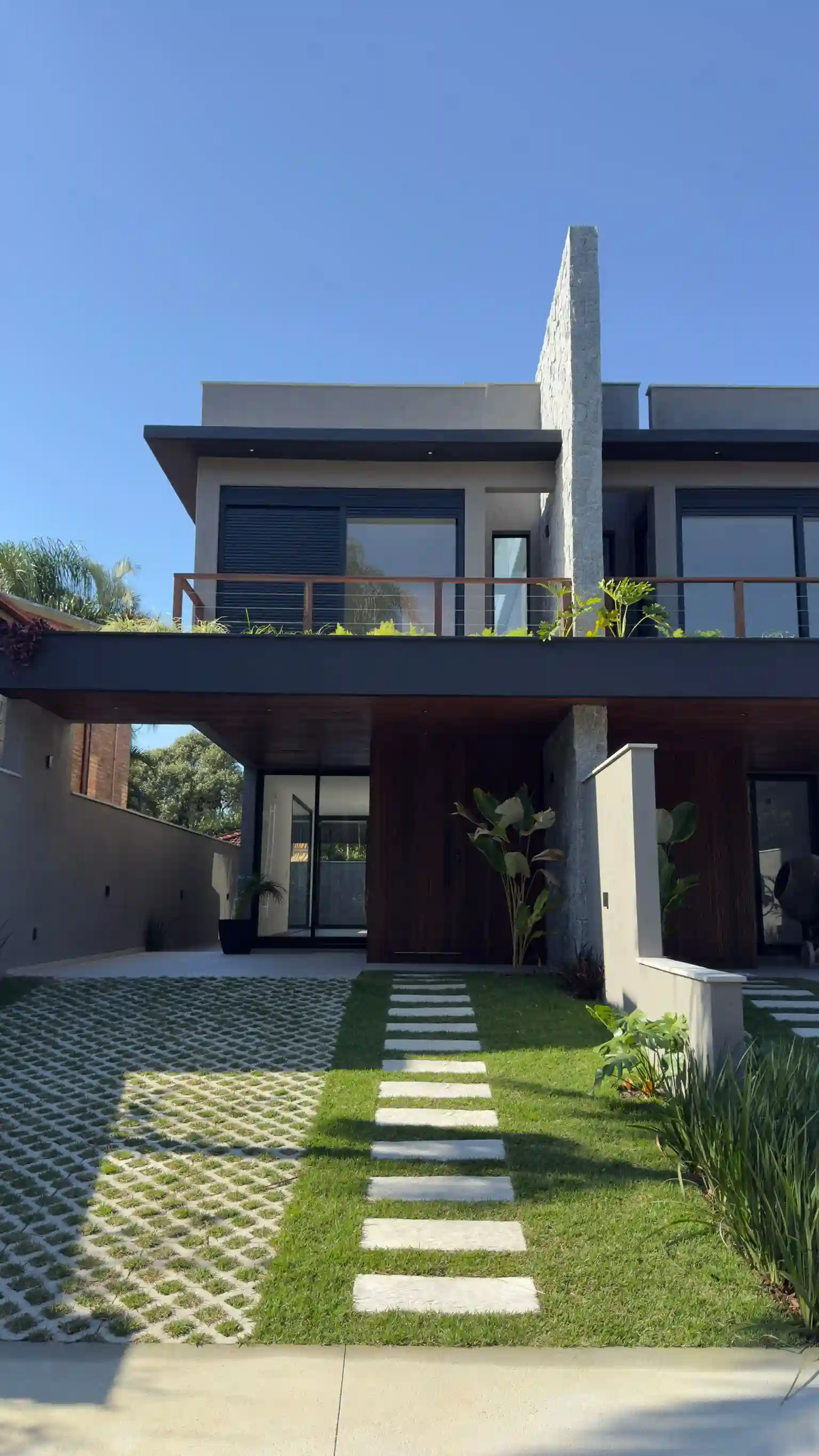
This is the practical reason the project exists. Casas Açores is priced at R$1,700,000 per home — deliberately above the R$1,000,000 South-region threshold — so a single purchase clears the investor-residency threshold (family members may have separate family-reunification routes) while giving you an architect-built house a short walk from the beach. Your home and your residency become one decision rather than two.
Talk it through
We work with OAB-registered immigration lawyers and the notaries who handle foreign-buyer purchases every week. Ask us how the residency route would look for your family.